
The past months have been as disorienting as any in contemporary history. A pandemic ravages the land, fueled in part by a sizable portion of the citizenry who, in the name of freedom, refuse to take preventative measures to slow its spread. A narcissistic sociopath refuses to acknowledge that he just lost a presidential election and instead calls out a dead Venezuelan for hacking American voting machines. Hundreds if not thousands of the narcissistic sociopath’s supporters, angered that dead Venezuelans and maybe a few Coastal Elites are stealing their votes, dress up like Visigoths and stage an Insurrection on Capitol Hill.
Today, impeachment proceedings are set to begin against that narcissistic sociopath.
Against this backdrop, I delved into Christopher Brown’s latest dystopian novel, Failed State. Brown’s novel, which takes place perhaps ten or twenty years after a Civil War has splintered our once-great nation into many warring less-than-great city states, totally pulled me in. I felt as if I were reading a realistic vision of what could become of us.
As the novel begins, Danny Kimoe, a down-and-out attorney with close ties to revolutionaries who have largely lost trust in him, enters a Dallas courtroom and makes incendiary allegations about official misconduct at the resettlement camps. The resettlement camps, Kimoe alleges, “were used as a cover for a secret program to disappear opponents of the regime.”
Kimoe’s motives in making these allegations may not be ideologically pure. Should he win his case, he stands to pocket a third of whatever financial settlement he’s able to finagle on behalf of his client.
There’s one problem though: opposing counsel claims he lacks standing because his client is dead. Which is news to Kimoe. But then again, Kimoe hasn’t been able to communicate with his client, who may have died in a firefight while attempting to kidnap an heiress, for months. Unless he can produce evidence that his client is still alive, the judge will throw out Kimoe’s case. Depriving Kimoe the chance at a big payday.
While what follows is a wild chase for evidence and/or bodies that takes us through a noirish vision of authoritarian Dallas and a wild romp through the anarchy of a liberated New Orleans. I reveled in the gritty, realistic details Brown provides along the way. Regime change widening economic inequality creates an unstable future. The environmental “Utopia” that insurgents attempt to create in a climate change-ravaged New Orleans breeds a wacky legal system where trees are given legal standing while state prisoners are hung from cages above the city square to face the wrath of the citizenry. There is no calm middle ground, no sense of economic security or even the comfort in knowing that there will always be a tomorrow.
And each time I lifted my head from the novel to take in the day’s headlines, I shuddered. Our powder keg nation is but a few sparks away from plunging into its own dystopia. In ten or fifteen years, we could very easily find ourselves in the pages of a Christopher Brown novel.
*****
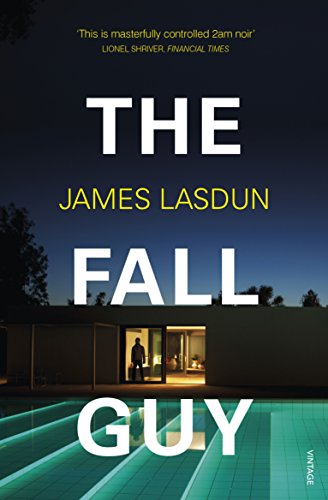
In the past, I’ve been lucky to interview several writers (including Mary Kubica, Lisa Jewell, and Anna Snoestra, Kaira Rouda, and James Lasdun). Christopher Brown has kindly consented to answer a few questions via email about his novel, FAILED STATE.
Question: Elsewhere, in a different context, you identified yourself as “a believer in practicing a kind of speculative realism that’s drawing up your imaginary worlds from the material of the observed world.”
Reading FAILED STATE, I was struck by your credible near-term portrayals of what might become of New Orleans and Dallas in the tumultuous aftermath of a second American Civil War. Everything was believable. There’s financial collapse, a crumbling infrastructure, contorted legal structures, and the continued effects of systematic injustice, climate change and environmental trauma. A large part of New Orleans is underwater and/or reclaimed by the swamps. Your vision is very disciplined. There was never a moment where I thought, “Oh man, this is so far-fetched that I can’t believe what I’m reading.”
As a writer, was that difficult? Were there moments when, drafting the novel, you had to rein in imaginative excesses for fear of believability issues? Times when you found yourself pulling back on an image or idea because it wasn’t “real” enough?
Christopher Brown: Striking the right balance between imaginative exuberance and realist restraint was the biggest challenge writing Failed State. I felt I had really hit the sweet spot with my prior book in this series, Rule of Capture, but that was easier because the settings were more familiar—authoritarian courtrooms and noir night haunts drawn from real life, their dark aspects highlighted to draw out the dystopia.
Failed State envisions a different society trying to be born from the ruins of the old one, with its central set piece a drowned New Orleans occupied by utopian separatists undertaking a radical rewilding. I tried to build it from things I had actually seen or found in history, while at the same time riffing on the aesthetic language of post-apocalyptic stories, so I found myself seesawing as I revised. Indeed, I initially developed the whole Dallas section that opens the book as a more mundane warm-up for Donny’s journey into the craziness of post-revolutionary New Orleans. So I’m delighted to hear those settings and scenarios still worked the same way for you and many other readers.
Question: I read this novel while the aftermath of the 2020 Presidential election played out. A deadly pandemic ravages the land. We have states literally suing each other because they don’t like how the citizens of those states voted. A popular conservative radio personality suggested that the nation is “trending toward secession.” Insurrectionists stormed Capitol Hill, killed at least one police officer and temporarily forced Congress to abandon its Constitutional requirements in certifying the election results. Forgive me for being alarmist, but one can be forgiven for thinking that, right now, IRL, we’re living through the opening pages of a dystopian novel.
Given our current situation, of what value is dystopian fiction? Do you worry that your dystopian vision of our future may not be as dystopian as our present reality?
Christopher Brown: I think dystopian framing continues to have tremendous value if done with fidelity to the idea of truth telling—looking at the world through a fun-house mirror in an effort to tell truths about the real world that conventional modes of realism cannot. And if you want to write a novel that also grapples with big ideas, the speculative laboratory of SF is hard to beat. My aim is not to envision a world that’s worse than the one we live in, but to more closely examine the things that are unjust or out of balance in the real one, in order to find paths to a plausibly better world we could have. Failed State is more utopian than dystopian in intent, trying to get closer to that more hopeful future the characters in the prior two books were fighting for.
Question: Last month also marked the fortieth anniversary of John Lennon’s death. Growing up, I was drawn to Lennon’s idea that, if we want a better future, we needed to imagine it first.
Lately, I’ve been wondering if the reason we find ourselves in our real-life present-day dystopia is because we haven’t created enough compelling visions of what a, realistically, a “good” society might look like.
Is it possible that realistic artistic visions of what a mismanaged future society might look like can, in effect, create an expectation that we’re slouching, societally, toward dystopia? Has dystopian fiction, and movies, helped to normalize horrendous political and governmental actions?
Christopher Brown: Well first I should note that, as readers of Tropic of Kansas know, one feature of the dystopian world of these books is that John Lennon is still alive, and annoying some of the cynical characters with his naïve utopian anthems. A provocative Easter egg that is not important to the plot, but signals an attitude about what the realistic path to an authentically better society would really take.
I do think the tropes of dystopian fiction are increasingly abused and misused in ways that disserve us, especially as they have been borrowed with greater frequency by journalists to describe the world we live in. I wrote an essay on just that point in connection with the launch of Failed State, suggesting that dystopian framing makes the news headlines work like chumbox ads—a form of sensationalism that distorts the truth to feed the doomscrolling clickbait machine, avoiding the hard work of looking at our real problems through something more honest than the reflexive partisan lenses we default to.
Watching the live footage as an angry mob ransacked the hallways and chambers of the Capitol where I once worked, I couldn’t help but think it looked like a set piece from one of my books. Indeed, there’s a scene much like that at the end of Tropic of Kansas, except that the place being ransacked is The White House, by a left-leaning people’s army seeking to install a more democratic government after they have evicted a dictator president. I like to think of speculative fiction as a safe laboratory to explore scenarios like that without real people getting hurt. But I increasingly wonder whether our fictions have a bigger impact on reality than we assume, in a society where we are trained to think of our lives like the movies we consume. As J.G. Ballard incisively remarked: “We live in a world ruled by fictions of every kind. The writer’s task is to invent the reality.” It’s a sobering reminder to me of the moral implications of the work.
Question: The second half of FAILED STATE examines a fledgling Utopian experiment centered around a radical environmental and egalitarian ethos. This Utopia, growing out of the ruins of New Orleans, is not without its problems. One senses that, in real life, such a radical experiment is likely to fail. Still, I enjoyed your willingness to explore what a Utopia might look like. What are the challenges to exploring Utopias through your lens of “speculative realism”?
Christopher Brown: Utopia means nowhere. It’s a Platonic ideal that can’t be achieved in real life. But that ideal plays an important role, providing an aspirational dipole to our pragmatic acceptance of the often ugly truths about how the world really works. As the material of fiction, utopian communities are fertile territory, especially if you accept how inherently doomed any effort to build a perfect society is. A Utopia grounded in realism is a tragedy. I don’t think I realized that when I set out to write Failed State, but that’s what I learned. And part of the dramatic power comes from showing the commitment of the characters to the struggle to build a more just society even when faced with the inevitability of failure—a kernel of persistent hope that runs through all three of these books.
Question: FAILED STATE, to me, is a dystopian legal thriller, and yet it’s often been labeled as “science fiction.” While the plot touches on, among other things, the development and distribution of genetically modified crops, the novel seems much more interested in exploring legal, political, and economic issues. How do you feel about the “science fiction” label that often gets attached to your work?
Which other contemporary writers do you consider “in your tribe”? Which, frankly, is another way of asking which other writers I should read!
Christopher Brown: I have always embraced the fantastic’s imaginative riffing as a core engine of my writing, and while I have never felt like a native to science fiction, the genre provided a literary community that was the closest thing to one where I fit in when I was getting started. SF workshops like Turkey City and Sycamore Hill were especially important in helping me develop my craft, as someone with a background in journalism but no academic training in creative writing.
The genre writers who had the most profound influences on me early on were pioneers of the New Wave like J. G. Ballard, Joanna Russ, Samuel R. Delany and Pamela Zoline who saw the potential of science fiction to do a better job of depicting contemporary life than literary realism, and the cyberpunks who saw the potential of science fiction to be cool—all of them writers for whom the undertaking started with an appreciation of the capacity of SF to liberate language in the way jazz liberates musical expression. But I’m equally influenced by non-genre writers, especially pioneering journalists of the same era like Hunter S. Thompson and Joan Didion, who wrote what you might call true dystopia.
I don’t think I really have a “tribe,” but peers cranking out new genre work today that I feel a kinship with in diverse ways include people like Tim Maughan, Malka Older, Nisi Shawl, Fernando Flores, Maria Dhavana Headley, Brendan Byrne and Robert G. Penner, along with writers from a generation before like William Gibson, Bruce Sterling, Eileen Gunn and M. John Harrison. I also gravitate to work by literary writers who play at the edges of genre, and lately have been binging on works by Latin American women writers like Samanta Schweblin and Fernanda Melchor.
Question: Danny Kimoe, FAILED STATE’s protagonist, reminded me a lot of the kind of character Humphrey Bogart would play in a 1940s film noir. He bills himself as an “ethically flexible” loner seemingly at war against everyone. We sense that his heart is in the right place yet we also sense, at times, that what he really wants is a pay-out. For all the “right reasons,” of course. At times, his quest seems quixotic. He’s literally trying to unearth people who are believed to be dead. He might as well be trying to unearth the Maltese Falcon. Unlike the typical Bogart character, he can be a bit of a self-medicating bumbler. I sense you had fun exploring his character and occupying his mindspace while writing this novel. Did you?
Conversely, were there characters you found difficult to enter into? Characters that, for whatever reason, you had to revisit several times before you got them “right”?
Christopher Brown: Donny came very easily to me, for a lot of different reasons. He has the qualities of many lawyers I have worked with, and he embodies both the heroic and antiheroic extremes of the archetypal lawyers in American fiction—the paladin of the underdog who speaks truth to power, and the self-interested shyster whose personal life is an even bigger mess than his practice. In a way, he expresses all the compromises we all (or at least most of us) make trying to pay the bills while convincing ourselves we are doing the right thing.
The hardest “characters” for me to write were the trees, animals and ecosystems who were the real clients being advocated for in the story. Science fiction is uniquely well-equipped to deal with non-human characters, but I found that approach to writing the alien didn’t really suit my story. There are great literary writers who manage to express the character of the non-human world through our experience of it, as Richard Powers so profoundly does with trees in The Overstory. I tried to bushwhack my own path, integrating something more like nature writing into a lawyer story, and making all that work in some semblance of narrative harmony was hard.
Question: You’re a lawyer by trade who cut his teeth working in the US Senate Judiciary Committee during the Clarence Thomas confirmation hearings. You’ve worked with tech start-ups and now devote your time working with “mission-oriented startups [and] a lot of nonprofits.”
FAILED STATE examines, among other things, how legal systems facilitate ideologies. Our current legal system was built to protect and justify capitalistic behavior. The radicals behind the novel’s New Orleans Utopia create a radically different legal system built to protect and justify the environment.
Can there be such a thing as an ideology-free or ideology-neutral legal system?
Christopher Brown: I take a pretty materialist approach to that question. I think all legal systems mostly express power and property interests more than ideas, through the mechanism of the inherited customs and norms of the community or society. Rule of Capture aims to show how the penumbra of reason that characterizes modern American law really just dresses up a raw exercise of extractive dominion over conquered land. Failed State tries to imagine what a better system could look like, mostly by grounding it in a different conception of what our interests really are, and a more inclusive conception of community. I think human ideologies are mostly manifestations of the insanity and delusion enabled by language. In the end, the only law I really believe in are the laws of nature.
Question: Do you ever get disgusted with how close current events are slouching towards what only ten or twenty years ago might've been characterized as "dystopia"? Personally, I'm having a really hard time squaring my modest expectations for a "civil" society with what's happening in reality.
Christopher Brown: Absolutely. I get disgusted, sickened, saddened, and shocked, but at the same time I’m not really surprised. Maybe because in my fiction I have tried to imagine the circumstances in which events like these could happen here, after seeing similar events—coups, revolutions, dictatorships, extreme political changes, and campaigns of genocide, expulsion or internment—happen throughout the world over the course of my lifetime. And what I found working on these books is that the US has already been much more dystopian for much of its history than most of us tend to acknowledge—at least those of us who are the beneficiaries of the reality bubble of middle class privilege. Working on these books I read the Supreme Court cases validating the theft of Indian lands, legal histories of the First Red Scare, and political histories of 1968, and every one of them seemed more genuinely dystopian than what was going on in contemporary life. At least until last week. Having working on Capitol Hill for five years before and after college, to see dudes dressed like extras from a Conan the Barbarian movie occupy the Senate floor was beyond anything I could have imagined.
(I wrote about it in today’s installment of my weekly newsletter, if you’re interested:
https://edgelands.substack.com/p/midwinter-in-the-tropic-of-kansas )
I hold out hope that, in real life as in fiction, the amplification of the dystopian aspects of the society helps to show the way to a better path. Events like we have seen during this presidential interregnum highlight the importance of being engaged in the political life of your community, of working to build real connections with your neighbors, of being invested in the work of building a future you would want to live in. Storytelling has an important role to play in that, by imagining how things could be.
Today, impeachment proceedings are set to begin against that narcissistic sociopath.
Against this backdrop, I delved into Christopher Brown’s latest dystopian novel, Failed State. Brown’s novel, which takes place perhaps ten or twenty years after a Civil War has splintered our once-great nation into many warring less-than-great city states, totally pulled me in. I felt as if I were reading a realistic vision of what could become of us.
As the novel begins, Danny Kimoe, a down-and-out attorney with close ties to revolutionaries who have largely lost trust in him, enters a Dallas courtroom and makes incendiary allegations about official misconduct at the resettlement camps. The resettlement camps, Kimoe alleges, “were used as a cover for a secret program to disappear opponents of the regime.”
Kimoe’s motives in making these allegations may not be ideologically pure. Should he win his case, he stands to pocket a third of whatever financial settlement he’s able to finagle on behalf of his client.
There’s one problem though: opposing counsel claims he lacks standing because his client is dead. Which is news to Kimoe. But then again, Kimoe hasn’t been able to communicate with his client, who may have died in a firefight while attempting to kidnap an heiress, for months. Unless he can produce evidence that his client is still alive, the judge will throw out Kimoe’s case. Depriving Kimoe the chance at a big payday.
While what follows is a wild chase for evidence and/or bodies that takes us through a noirish vision of authoritarian Dallas and a wild romp through the anarchy of a liberated New Orleans. I reveled in the gritty, realistic details Brown provides along the way. Regime change widening economic inequality creates an unstable future. The environmental “Utopia” that insurgents attempt to create in a climate change-ravaged New Orleans breeds a wacky legal system where trees are given legal standing while state prisoners are hung from cages above the city square to face the wrath of the citizenry. There is no calm middle ground, no sense of economic security or even the comfort in knowing that there will always be a tomorrow.
And each time I lifted my head from the novel to take in the day’s headlines, I shuddered. Our powder keg nation is but a few sparks away from plunging into its own dystopia. In ten or fifteen years, we could very easily find ourselves in the pages of a Christopher Brown novel.
*****
In the past, I’ve been lucky to interview several writers (including Mary Kubica, Lisa Jewell, and Anna Snoestra, Kaira Rouda, and James Lasdun). Christopher Brown has kindly consented to answer a few questions via email about his novel, FAILED STATE.
Question: Elsewhere, in a different context, you identified yourself as “a believer in practicing a kind of speculative realism that’s drawing up your imaginary worlds from the material of the observed world.”
Reading FAILED STATE, I was struck by your credible near-term portrayals of what might become of New Orleans and Dallas in the tumultuous aftermath of a second American Civil War. Everything was believable. There’s financial collapse, a crumbling infrastructure, contorted legal structures, and the continued effects of systematic injustice, climate change and environmental trauma. A large part of New Orleans is underwater and/or reclaimed by the swamps. Your vision is very disciplined. There was never a moment where I thought, “Oh man, this is so far-fetched that I can’t believe what I’m reading.”
As a writer, was that difficult? Were there moments when, drafting the novel, you had to rein in imaginative excesses for fear of believability issues? Times when you found yourself pulling back on an image or idea because it wasn’t “real” enough?
Christopher Brown: Striking the right balance between imaginative exuberance and realist restraint was the biggest challenge writing Failed State. I felt I had really hit the sweet spot with my prior book in this series, Rule of Capture, but that was easier because the settings were more familiar—authoritarian courtrooms and noir night haunts drawn from real life, their dark aspects highlighted to draw out the dystopia.
Failed State envisions a different society trying to be born from the ruins of the old one, with its central set piece a drowned New Orleans occupied by utopian separatists undertaking a radical rewilding. I tried to build it from things I had actually seen or found in history, while at the same time riffing on the aesthetic language of post-apocalyptic stories, so I found myself seesawing as I revised. Indeed, I initially developed the whole Dallas section that opens the book as a more mundane warm-up for Donny’s journey into the craziness of post-revolutionary New Orleans. So I’m delighted to hear those settings and scenarios still worked the same way for you and many other readers.
Question: I read this novel while the aftermath of the 2020 Presidential election played out. A deadly pandemic ravages the land. We have states literally suing each other because they don’t like how the citizens of those states voted. A popular conservative radio personality suggested that the nation is “trending toward secession.” Insurrectionists stormed Capitol Hill, killed at least one police officer and temporarily forced Congress to abandon its Constitutional requirements in certifying the election results. Forgive me for being alarmist, but one can be forgiven for thinking that, right now, IRL, we’re living through the opening pages of a dystopian novel.
Given our current situation, of what value is dystopian fiction? Do you worry that your dystopian vision of our future may not be as dystopian as our present reality?
Christopher Brown: I think dystopian framing continues to have tremendous value if done with fidelity to the idea of truth telling—looking at the world through a fun-house mirror in an effort to tell truths about the real world that conventional modes of realism cannot. And if you want to write a novel that also grapples with big ideas, the speculative laboratory of SF is hard to beat. My aim is not to envision a world that’s worse than the one we live in, but to more closely examine the things that are unjust or out of balance in the real one, in order to find paths to a plausibly better world we could have. Failed State is more utopian than dystopian in intent, trying to get closer to that more hopeful future the characters in the prior two books were fighting for.
Question: Last month also marked the fortieth anniversary of John Lennon’s death. Growing up, I was drawn to Lennon’s idea that, if we want a better future, we needed to imagine it first.
Lately, I’ve been wondering if the reason we find ourselves in our real-life present-day dystopia is because we haven’t created enough compelling visions of what a, realistically, a “good” society might look like.
Is it possible that realistic artistic visions of what a mismanaged future society might look like can, in effect, create an expectation that we’re slouching, societally, toward dystopia? Has dystopian fiction, and movies, helped to normalize horrendous political and governmental actions?
Christopher Brown: Well first I should note that, as readers of Tropic of Kansas know, one feature of the dystopian world of these books is that John Lennon is still alive, and annoying some of the cynical characters with his naïve utopian anthems. A provocative Easter egg that is not important to the plot, but signals an attitude about what the realistic path to an authentically better society would really take.
I do think the tropes of dystopian fiction are increasingly abused and misused in ways that disserve us, especially as they have been borrowed with greater frequency by journalists to describe the world we live in. I wrote an essay on just that point in connection with the launch of Failed State, suggesting that dystopian framing makes the news headlines work like chumbox ads—a form of sensationalism that distorts the truth to feed the doomscrolling clickbait machine, avoiding the hard work of looking at our real problems through something more honest than the reflexive partisan lenses we default to.
Watching the live footage as an angry mob ransacked the hallways and chambers of the Capitol where I once worked, I couldn’t help but think it looked like a set piece from one of my books. Indeed, there’s a scene much like that at the end of Tropic of Kansas, except that the place being ransacked is The White House, by a left-leaning people’s army seeking to install a more democratic government after they have evicted a dictator president. I like to think of speculative fiction as a safe laboratory to explore scenarios like that without real people getting hurt. But I increasingly wonder whether our fictions have a bigger impact on reality than we assume, in a society where we are trained to think of our lives like the movies we consume. As J.G. Ballard incisively remarked: “We live in a world ruled by fictions of every kind. The writer’s task is to invent the reality.” It’s a sobering reminder to me of the moral implications of the work.
Question: The second half of FAILED STATE examines a fledgling Utopian experiment centered around a radical environmental and egalitarian ethos. This Utopia, growing out of the ruins of New Orleans, is not without its problems. One senses that, in real life, such a radical experiment is likely to fail. Still, I enjoyed your willingness to explore what a Utopia might look like. What are the challenges to exploring Utopias through your lens of “speculative realism”?
Christopher Brown: Utopia means nowhere. It’s a Platonic ideal that can’t be achieved in real life. But that ideal plays an important role, providing an aspirational dipole to our pragmatic acceptance of the often ugly truths about how the world really works. As the material of fiction, utopian communities are fertile territory, especially if you accept how inherently doomed any effort to build a perfect society is. A Utopia grounded in realism is a tragedy. I don’t think I realized that when I set out to write Failed State, but that’s what I learned. And part of the dramatic power comes from showing the commitment of the characters to the struggle to build a more just society even when faced with the inevitability of failure—a kernel of persistent hope that runs through all three of these books.
Question: FAILED STATE, to me, is a dystopian legal thriller, and yet it’s often been labeled as “science fiction.” While the plot touches on, among other things, the development and distribution of genetically modified crops, the novel seems much more interested in exploring legal, political, and economic issues. How do you feel about the “science fiction” label that often gets attached to your work?
Which other contemporary writers do you consider “in your tribe”? Which, frankly, is another way of asking which other writers I should read!
Christopher Brown: I have always embraced the fantastic’s imaginative riffing as a core engine of my writing, and while I have never felt like a native to science fiction, the genre provided a literary community that was the closest thing to one where I fit in when I was getting started. SF workshops like Turkey City and Sycamore Hill were especially important in helping me develop my craft, as someone with a background in journalism but no academic training in creative writing.
The genre writers who had the most profound influences on me early on were pioneers of the New Wave like J. G. Ballard, Joanna Russ, Samuel R. Delany and Pamela Zoline who saw the potential of science fiction to do a better job of depicting contemporary life than literary realism, and the cyberpunks who saw the potential of science fiction to be cool—all of them writers for whom the undertaking started with an appreciation of the capacity of SF to liberate language in the way jazz liberates musical expression. But I’m equally influenced by non-genre writers, especially pioneering journalists of the same era like Hunter S. Thompson and Joan Didion, who wrote what you might call true dystopia.
I don’t think I really have a “tribe,” but peers cranking out new genre work today that I feel a kinship with in diverse ways include people like Tim Maughan, Malka Older, Nisi Shawl, Fernando Flores, Maria Dhavana Headley, Brendan Byrne and Robert G. Penner, along with writers from a generation before like William Gibson, Bruce Sterling, Eileen Gunn and M. John Harrison. I also gravitate to work by literary writers who play at the edges of genre, and lately have been binging on works by Latin American women writers like Samanta Schweblin and Fernanda Melchor.
Question: Danny Kimoe, FAILED STATE’s protagonist, reminded me a lot of the kind of character Humphrey Bogart would play in a 1940s film noir. He bills himself as an “ethically flexible” loner seemingly at war against everyone. We sense that his heart is in the right place yet we also sense, at times, that what he really wants is a pay-out. For all the “right reasons,” of course. At times, his quest seems quixotic. He’s literally trying to unearth people who are believed to be dead. He might as well be trying to unearth the Maltese Falcon. Unlike the typical Bogart character, he can be a bit of a self-medicating bumbler. I sense you had fun exploring his character and occupying his mindspace while writing this novel. Did you?
Conversely, were there characters you found difficult to enter into? Characters that, for whatever reason, you had to revisit several times before you got them “right”?
Christopher Brown: Donny came very easily to me, for a lot of different reasons. He has the qualities of many lawyers I have worked with, and he embodies both the heroic and antiheroic extremes of the archetypal lawyers in American fiction—the paladin of the underdog who speaks truth to power, and the self-interested shyster whose personal life is an even bigger mess than his practice. In a way, he expresses all the compromises we all (or at least most of us) make trying to pay the bills while convincing ourselves we are doing the right thing.
The hardest “characters” for me to write were the trees, animals and ecosystems who were the real clients being advocated for in the story. Science fiction is uniquely well-equipped to deal with non-human characters, but I found that approach to writing the alien didn’t really suit my story. There are great literary writers who manage to express the character of the non-human world through our experience of it, as Richard Powers so profoundly does with trees in The Overstory. I tried to bushwhack my own path, integrating something more like nature writing into a lawyer story, and making all that work in some semblance of narrative harmony was hard.
Question: You’re a lawyer by trade who cut his teeth working in the US Senate Judiciary Committee during the Clarence Thomas confirmation hearings. You’ve worked with tech start-ups and now devote your time working with “mission-oriented startups [and] a lot of nonprofits.”
FAILED STATE examines, among other things, how legal systems facilitate ideologies. Our current legal system was built to protect and justify capitalistic behavior. The radicals behind the novel’s New Orleans Utopia create a radically different legal system built to protect and justify the environment.
Can there be such a thing as an ideology-free or ideology-neutral legal system?
Christopher Brown: I take a pretty materialist approach to that question. I think all legal systems mostly express power and property interests more than ideas, through the mechanism of the inherited customs and norms of the community or society. Rule of Capture aims to show how the penumbra of reason that characterizes modern American law really just dresses up a raw exercise of extractive dominion over conquered land. Failed State tries to imagine what a better system could look like, mostly by grounding it in a different conception of what our interests really are, and a more inclusive conception of community. I think human ideologies are mostly manifestations of the insanity and delusion enabled by language. In the end, the only law I really believe in are the laws of nature.
Question: Do you ever get disgusted with how close current events are slouching towards what only ten or twenty years ago might've been characterized as "dystopia"? Personally, I'm having a really hard time squaring my modest expectations for a "civil" society with what's happening in reality.
Christopher Brown: Absolutely. I get disgusted, sickened, saddened, and shocked, but at the same time I’m not really surprised. Maybe because in my fiction I have tried to imagine the circumstances in which events like these could happen here, after seeing similar events—coups, revolutions, dictatorships, extreme political changes, and campaigns of genocide, expulsion or internment—happen throughout the world over the course of my lifetime. And what I found working on these books is that the US has already been much more dystopian for much of its history than most of us tend to acknowledge—at least those of us who are the beneficiaries of the reality bubble of middle class privilege. Working on these books I read the Supreme Court cases validating the theft of Indian lands, legal histories of the First Red Scare, and political histories of 1968, and every one of them seemed more genuinely dystopian than what was going on in contemporary life. At least until last week. Having working on Capitol Hill for five years before and after college, to see dudes dressed like extras from a Conan the Barbarian movie occupy the Senate floor was beyond anything I could have imagined.
(I wrote about it in today’s installment of my weekly newsletter, if you’re interested:
https://edgelands.substack.com/p/midwinter-in-the-tropic-of-kansas )
I hold out hope that, in real life as in fiction, the amplification of the dystopian aspects of the society helps to show the way to a better path. Events like we have seen during this presidential interregnum highlight the importance of being engaged in the political life of your community, of working to build real connections with your neighbors, of being invested in the work of building a future you would want to live in. Storytelling has an important role to play in that, by imagining how things could be.



 RSS Feed
