Nick Kocz's Ridiculous Words
  • SM Thayer
  • About
  • Writing
  • Contact
  • Blog

Harper Lee & Umberto Eco: Giants Have Died

2/20/2016

 
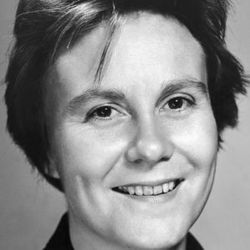
PictureHarper Lee

Last night, working on one of my novels, I typed, "The preposterous was the last refuge of the desperate, a form of magical thinking to confront everyday futility."

I stopped, paused, considered what I wrote. I am not in the habit of crafting artistic statements of intent, but it struck me as the perfect mission statement for most of the characters I write about.

And about myself. Here I am, well past the age when you would expect me to know better, and I'm still trying to craft the one perfect novel that-- gasp!-- might save the world. 

Yeah. Preposterous. Preposterous that, in this age of video gaming and declining patience with the written word, reasonable people might still think that it is the novel that can save the world. And preposterous, given the many times I've come up empty on this endeavor, that I still think I might be able to write that novel. 

Within the past 48 hours, I've talked with at least two other writers who, in varying stages, are deciding whether, in the face of rejection and debate about the efficacy of writing, they should still press on. One has published a couple of novels. The other, a poet, revealed to me that she just won a fairly major award that she still can't publicly announce. We've all, through our careers, have received just enough encouragement, just enough acceptances and wider acclaim to have reason to believe we're reasonably talented. (I say this knowing that, of the bunch, I'm probably the least decorated of the three). We write because of our own internal rewards we receive when drafting decent sentences, crafting decent images, and (as preposterous as this sounds) constructing meaning within our work.

But it's still preposterous. Years ago, like many others, I believed that if only I could land a story in X Journal, if only editor Y would take notice in me, if only Agent Z would represent my work, somehow the heavens might part and, lo and behold, a wider audience would take notice of me.

It still hasn't happened. 

Years ago, while interviewing a former business associate of baseball star Lenny Dykstra (in conjunction with a nonfiction piece I was writing), I came across one of Einstein's lesser-known theories: the theory of insanity. According to Einstein, insanity was doing the same thing over and over again and expecting a different result.

Each time I begin a new project, I think of that. As in, "Hey Dumbass! How many novels have you tried to write? Why do you expect this to be any different?"

Efficacy issues. That's what I sometimes battle against. I suspect many others do, too.  As in, if the net result of spending hundrends of hours writing a novel is rejection, wouldn't it be wiser to invest that time in something more sensible? Like looking at silly cat videos on YouTube? 

I remember reading TO KILL A MOCKINGBIRD in high school. I remember the spirit of suspense as I tore through it, and the idea that I was reading a form of extended wisdom that wasn't exactly available through other mediums. Our teacher told us the novel's history and its supposed impact on race relations and civil rights in this country. It was a novel, we were told, that helped change the preposterous Jim Crow laws, helped bring about greater equality, helped make the world a better place.

I took FOUCAULT'S PENDULUM with me on the one and only time I visited Europe. I knew little about the book so it still surprises me that I took it along with me. Perhaps I thought it was thick enough to fill my two-week vacation. My wife and I were going to Italy, a vacation capped off with a whirlwind 24 hours in Milan. I didn't even know that Milan was the primary locale on Eco's novel. And yet, as we crammed in visits to La Scala, The Duomo, The Galleria Vittorio Emanuele II, and the Santa Maria Delle Grazie (the convent where Da Vinci's THE LAST SUPPER still hangs), it was like I was experiencing a sense of deja vu-- I had read about these places and inhabited them so thoroughly through Eco, it was like I was visiting old lost friends for the first time.

These two touchstone literary moments are among the many that have formed me, as a person, and as a writer. I suspect anyone who's ever tried to write a poem, a short story, a novel, an essay has similar moments. I suspect I'm not the only one grieving Lee and Eco's loss today. But I'm also filled with hope-- not that I perhaps might offer through my writing a similar touchstone moment to others, but the hope that the next book I pick up to read will again provide that touchstone moment for me.

ADDENDUM: I should add, I haven't read GO SET A WATCHMAN, Harper Lee's early MOCKINGBIRD draft that was released last year as a sort of sequel to her classic. Rather than being the fair-minded attorney who is bent on seeing that Tom Robinson (an African-American) gets a fair trial before an all-white jury on a trumped-up rape rap, GO SET A WATCHMAN portrays Atticus Finch as a racist who attended Klan meetings.

Most reviewers panned GO SET A WATCHMAN for its politics. However, reviewers also pointed out that, when compared to MOCKINGBIRD's lucid and lyrical prose, GO SET A WATCHMAN just was not very well written. When I read this, it made me love Harper Lee even more. The book that came out as GO SET A WATCHMAN was written before TO KILL A MOCKINGBIRD.  To borrow Anne Lamott's pungent phrase, it was a "shitty first draft." And yet, rather than give into Einstein's insanity theory and abandon the project, Harper Lee must have worked tirelessly at her second draft to make is shine so wonderfully. 


Making it REAL

12/4/2011

 
Picture
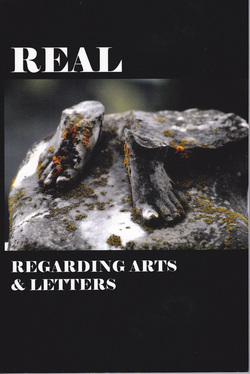
_The new issue of REAL: Regarding Arts & Letters arrived in my mailbox on the day after Thanksgiving.  I had been looking forward to that issue for purely selfish reasons: a story of mine was included in it.  Most of my published stories fall within the Absurdist camp, but for the past year I’ve tried to throw myself at traditional realism—partly for the challenge of seeing whether I can pull off a “realist” story, but also because I’ve really become conscious of the limitations inherent in Absurdist aesthetics.

The REAL issue arrived with a kind note from the magazine’s outgoing editor, Christine Butterworth-McDermott, saying that my story was one of her favorites from her seven-year editorial tenure. 

Needless to say, this made my post-Thanksgiving weekend.

“You Okay?” is not only my most realistic published story, but also the most nakedly autobiographical.  Our first son had a latching problem.  Nothing messes with the one’s emotions more than the birth of a child.  Though we had worked with a lactation consultant at the hospital where Stephen was born, we were not able to get him to nurse naturally.  Eventually we rented a breast pump.  I’d feed Stephen from a bottle while Alison, my wife, sat beside me, pumping.  We were working together to care for our son, just not in the way we had imagined.

On the first night home from the hospital, I raised Stephen to my shoulder and burped him.  I was new to fatherhood and, fearing that I might harm him with too hard a pat, my attempts to burp him were woefully pathetic.  Somehow though, they worked.  His burps were loud, tremendous eruptions that filled the air with the scent of the milk he had drunk. 

For a baby, Stephen’s neck muscles were remarkably well-developed.  After burping, he lifted his head off my shoulder.  I still remember how warm he felt.  He brushed his cheek against the side of my neck, his skin soft and smooth and feeling of life.

Then, as I wrote in my story:

All of a sudden, a surge like electricity burst through me.  Something warm and wet had clamped onto my earlobe, so startling me that it took a moment to figure its source.  Stephen had raised his head off my shoulder and latched himself to my ear, plying my earlobe between his tongue and the soft roof of his mouth… Stephen’s lips remained on my ear.  Even when I turned to face [Alison], he hung on.  I tried to explain, but what Stephen was doing tickled, causing me to laugh.  It really was the nicest sensation, those lips at work on my earlobe.

As nice as he felt, I felt immediate guilt, for I imagined the sensation of Stephen’s lips was what Alison desperately wanted to feel for herself.

Try as I might, I just couldn’t figure any real way of making this story work outside traditional realism—mind you, I’ve written plenty of Absurd baby stories!—so I was tremendously thrilled last week to learn that Ms. Butterworth-McDermott had also nominated the story for a Pushcart Prize. 

Thank you, Christine!

In Other News: I’ve got a new piece up at The Nervous Breakdown, called “Rockstars: Lenny Dykstra and Dan Herman.”   Though it’s only a few thousand words long, it took me several drafts and several weeks to write, but I think it kinda works.  Check it out and tell me what you think!

Dykstra, the former New York Mets and Philadelphia Phillies star, has been a bit of an obsession for me.  I’ve written about him before on this blog, and will likely do so again soon.  His over-the-top personality fascinates me.  Not that I’d ever want to personally meet the guy, for he really does seem to ooze bile into every life he touches, but he’s a good gawk if you’re careful to maintain a safe distance.

What else?  We spent most of Friday and Saturday in Roanoke doing fun stuff, including attending the Friday’s “A Dickens of a Christmas” festival at Market Square, a Saturday screening of “Der Golem” (1920) at the Taubman Museum of Art (with live musical accompaniment that our children loved!) and Katherine Devine’s Grandin Village studio party. 

More than anything though, I’ve had a lot of good feedback recently on my work, which makes me hopeful that more good things might soon be heading this way soon.


The Books I'll Never Read

8/26/2011

 
Picture
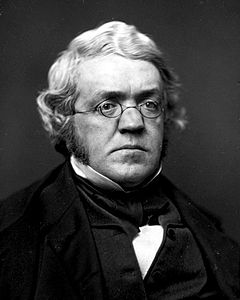
My fingers will never sully his pages.
On the night after the earthquake, I was reading Virginia Woolf’s A ROOM OF ONE’S OWN when I came across these lines:

“[I]t is in this famous library that the manuscript of Thackeray’s ESMOND is also preserved. The critics often say that ESMOND is Thackeray’s most perfect novel.”

I’ve never read Thackeray, nor heard of this novel.  I put down the Woolf and Wikipedia’d Thackeray.  The novel in question might more rightly be called THE HISTORY OF HENRY ESMOND, or so Wikipedia informed me.  I wondered why I hadn’t read Thackeray before.  Why had I never read VANITY FAIR, which, despite Woolf’s 1928 assessment, is novel which critics today seem to agree was his best?

I struggled mightily to fight off the impulse to dash off to my nearest library and search out the Thackeray stacks.  There are times when I berate myself for being so poorly read.  This was one of them.  Never mind that it was nearing midnight: Project Gutenberg (god bless them!) listed 30+ Thackeray titles, each of which could be downloaded within seconds.   I stared at my laptop, my fingers poised over the keyboard, debating where to begin.

And then it hit me: I’m never going to read Thackeray.  Even if I live to 100, I’m never going to imbibe one of his sentences or wrap my hands around one of his bloated novels.

This realization came with both sadness and a feeling of liberation: as sad as it was to confront the limitations to the breadth of my reading, it felt good to let go of my lofty readerly aspirations.  

Every so often, one encounters a much-talked-about list of the books everyone ought to read.  Or a list of the greatest 20th century American novels.  These lists make their way around the internet with frightening regularity, momentarily halting whatever conversations are going on about contemporary letters.  Like everyone, I glance at these lists and pat myself on the back (good boy! what good taste!) for having read many of the listed books—but then, inevitably, comes the moment when I tally those I haven’t read.  And I think to myself: Dear boy, just what have you been doing with your life?

I was fortunate to grow up in a town that lavishly funded its school libraries.  The libraries at my middle school and high school were vast brightly-lit treasure lands staffed with several librarians to guide your journey if you became lost.  I remember checking out maybe seven or eight books from my middle school library on the cusp of my seventh grade spring break.  They were biographies mostly: John Charles Fremont and Sun Yat-sen were the two that I remember now.  I had vowed to read all the books over the upcoming week, but I fell short: perhaps the Fremont and Yat-sen books were the only ones that I finished.  I remember feeling foolish the following week when  returning the stack of books that mostly went unread.  Perhaps the librarians asked me about them, and I shrugged them off.

Why did I feel like such a failure?

It was the first time that my intellectual appetite outpaced my capabilities.

After my Thackeray epiphany the other day, I thought of the other writers I would never likely read: Dickens, Proust, Tolstoy, Mailer, George Eliot, Steinbeck, Rushdie, and Rilke.

The big names kept crashing down all around me: Christopher Marlowe, Simone de Beauvoir, Garcia Lorca, Swinburne, Colette, dos Passos, Styron.  All of them unread.

Then there were the writers whom I had merely sampled—a few stories or maybe a novel: Conrad, Twain, Henry James, Solzhenitsyn, Goethe, Faulkner, Dorothy Parker, Ring Lardner, Thomas Mann, Updike, Duras.  Given an endless amount of time, I would gladly refresh myself in their pages, but in this world one must make choices every time we step into a library or bookstore.

While I was doing my MFA, I took an independent study course on The Absurd with Dr. Christine Kiebuzinska.  It was one of the most remarkable experiences of my reading life.  Over the course of eight months, we read a couple of dozen books together.  She had me read multiple translation of Camus and Sartre (something every writer-in-training should try, if only to gander and the remarkable variations in which one can construct sentences) and exposed me to a number of writers (including Gombrowicz, Hugo von Hofmannsthal) I might not otherwise encounter.

Yet at the end of this remarkable experience, I came to the understanding that it was more important for me to keep abreast of the currents in contemporary literature than to delve deeply or exclusively in the past.

Contemporary literature is filled with as many hits as it is with misses.  There are times I shake my head and wonder why I wasted a few hours reading the blunder du jour, but (like most would-be writers) I read not only for my enjoyment but to sense contemporary possibilities, for no matter how good my writing might one day be, I’ll never be read in c. 1946 France.

Meaning, I guess, that Camus and Sartre have nothing to fear.

Part of being an American is making peace with one’s ignorance.  In this way, I am no different from the Tea Partiers who choose to turn their backs on a century of progressive American accomplishments.  When I step into the bookstore, picking up an old Henry James classic means foregoing at least temporarily the new Kevin Wilson and Caitlin Horrocks books (both of which I hope to read soon).

Yet, still there is sadness.

And no: the list of writers whom I’ll never read is not fixed.  If you had asked me last week, I probably would have included Jane Austin in that list.  However, reading Woolf’s fine opinion of Austin makes me want to check out PRIDE AND PREJUDICE the next time I’m in the library.  Would that be a good place to start?

~~~

  DYKSTRA ERRATA: That one-time baseball player who hit me up for money?  He's sleaze. You know that.  I know that.

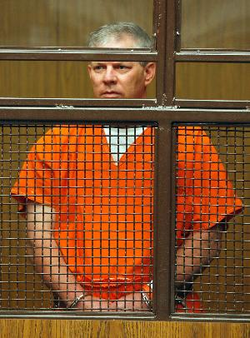
Yesterday, he was charged with multiple counts of indecent exposure.

The incidents date from 2009 to just a few months ago. Lenny would place Craigslist ads for personal assistants, housekeepers, and chauffeurs. The ads would request candidates email pictures of themselves to him. He'd claim the jobs would be dream jobs, that he'd pay incredible salaries and that, through him, his employees would meet high-flying sports and entertainment celebrities.

Interviewing the candidates, all of them female and all of them having sent him pictures of themselves that he must have fancied, he'd disrobe and say that the job would also require "massages."  Some of the girls, bedazzled by the prospect of good money, probably serviced him-- Lenny, after all, isn't as outright stupid as he's often portrayed; I doubt he would have placed so many Craigslist ads if he was constantly being rebuffed.

The thing is, I wonder why law enforcement waited so long to charge him with these crimes, especially since it had been well-known from various published accounts and accusations that this was Lenny's modus operandi for getting hand jobs.  While the police waited, they allowed Lenny to do this again and again.


Lenny Dykstra Hitting Me Up For Money

7/20/2011

 
Picture
Last week, I got an email* from Lenny Dykstra hitting me up for money.  As detailed in The New York Times (and elsewhere), the one-time baseball star turned financial guru is bankrupt.  He’s being held in jail on multiple felony charges.  In 2009-2010, I carried on an email correspondence with him.  We are not what you might call “tight,” yet he wanted to know if I could spare $1,000-2,000 to help him make bail.

I’m a lifelong New York Mets fan.  Outside of Tug McGraw, the screwball-throwing reliever who was the heart and soul of the Ya Gotta Believe ’73 team, Lenny is my favorite all-time Met.  On an ’86 team loaded with stars (Strawberry, Gooden, Carter, Hernandez, Darling), it was his scrappy play and clutch post-season hitting that was instrumental in winning the World Series.  And yes, in typical Mets fashion, they traded him to the Philadelphia Phillies.

When it came to sizing up ballplayers and game strategy, Lenny was brilliant.  Off the diamond however, maybe not so much.  I still remember how he tried to pick up vee-jay Martha Quinn when being interviewed on MTV.  He lived life recklessly, famously wrecking a Mercedes in a drunk driving accident after John Kruk’s 1991 bachelor party—in the process nearly killing himself and catcher Darren Daulton.  He turned State’s witness in a case against a Mississippi gambling emporium, but his Atlantic City gambling escapades were legendary.  Rumors of recreational and performance-enhancing drug use dogged him throughout his career.  After Phillies’ losses, he sulked alone at bars. 

Like many people, I assumed he was a “dumb jock” (an unfortunate stereotype), so I was shocked to learn in a March 2008  New Yorker article that he had made it big in the business and financial worlds.  He had opened a chain of high-end car washes in California, which he leveraged into a fortune that was ultimately pegged at $58 million. 

Sixteen months later, in July 2009, Lenny filed for bankruptcy.  His petition for bankruptcy protection indicated he was $50 million in debt.  The guy was supposed to be a financial genius—but do the math: could one guy really blow through $100 million so fast?

 A July 9 2009 CNBC interview was even more shocking: for eighteen minutes, he rambled and mumbled—at times coherently, other times not.  To my untrained eye, he appeared to be under the influence.  Though he readily acknowledged agreeing to the very dubious financial arrangement that led to his bankruptcy, he appeared to believe himself a victim of some vast conspiracy to rid Lenny of his wealth.

Okay.  So being the putz that I am, I sent Lenny an email advising him to seek help.  Therapeutic help.  I told him about an alcoholic family member whose life became “so much calmer, better, after he tried going sober.”

At the end of the email I wrote,

“If you're still reading this, you're probably thinking, [screw] this guy named Kocz. But I sincerely wish you the best.”

Much to my surprise, he wrote back a nice email thanking me for my concern.

Lenny’s life fell apart during 2009.  His wife divorced him.  He was forced to vacate his residence.  Car dealerships repo’d his rides.  Player’s Club, the magazine he was launching, went under—which was a shame, because it featured some of the very best photographic printing I’ve ever seen in a magazine.  Friends and family disowned him.  Suing Lenny became a cottage industry, as did writing about his troubles.

I became obsessed with Lenny Dykstra.  No, I didn’t stalk him, but I read everything I could find about him.  I read hundreds if not thousands of newspaper, magazine, and internet articles about him.  And I’ve read hundreds if not thousands of pages of legal filings related to the lawsuits that, like fleas to an old mutt, leap up wherever he goes.  I tracked down old friends of his to ask their recollections.  And beat baseball reporters.

And I contacted Lenny again. 

You would think that a gregarious jock would have had lots of friends in high school, but Lenny was baseball obsessed, to the point where he’d practice for six hours each day.  The story goes that he only had one friend in high school—and that was because he needed someone to play catch with.

[Lenny later hooked that friend up with a job in one of his car washes—and when he caught that friend stealing from him, he fired him.]

I once asked Lenny, via email, if the story about having only one friend was true.

In typical jock fashion, he wrote back, “YES, AND I STILL HAVE ONLY ONE FRIEND - MY RIGHT HAND.”

Who but Lenny emails in boldface CAPS?

My response was equally crude: “I thought you were left-handed ;)”

I got to admit, it was pretty cool emailing cracks and whatnot with Lenny.  He’s one of those over-sized glammed up and game Americans I wrote about last week whose life seems too fantastical to be real.   In 1983, the Lynchburg Mets (then the New York Mets’ A-level minor league farm team) played an exhibition game in Shea Stadium.  Lenny hits a homerun his first time at bat.  Can you imagine?  He’s in the low minor leagues, far removed from big league attention, yet his very first at bat in the ballpark where he would become famous is a dinger!  Is that uncanny or what? 

As a fiction writer, I struggled philosophically with how to come to grips with a phenomenon such as Lenny Dykstra.  When one begins writing fiction, one is inevitably cautioned against creating over-sized characters for fear that readers will find them too fantastic to be believed.  Imagine writing about that Shea homerun.  Would it seem schmaltzy?  sentimental?  Would readers believe it? 

More than anything else, I think this fear of not being believed is why so much contemporary literary fiction is “small.”  “Small” as in featuring more under-sized characters than over-sized Dudes.

Last year I started writing about Lenny, creating a (very) thinly veiled roman à clef centered around the Lenny-like character’s purchase of an over-sized mansion that would be his undoing.  At the time, I was in-between projects.  An agent had agreed to represent another novel I had written and, while I waited for her suggestions on revisions for that novel, I wrote about 12,000 words of Lenny.  And I swear, that work was really fun.  Then my agent got back to me about the previous novel, and I abandoned Lenny to work on three successive rounds of revisions. 

It wasn’t just the revisions that got in the way of the Lenny project.  I struggled with how far to stray from real events.  More problematic was how I should portray the Lenny-like character—if you believe even a tenth of what’s written on the internet about Lenny, you begin to understand that he might have some very unsavory moral and ethical issues.  Could I risk creating a more sympathetic character than the real-life Lenny might be?

Until I got that email last week hitting me up for money, I hadn’t heard from Lenny in thirteen months.  Last year, his emails were boastful.  He told me how he was going to “shock the house” and prevail in his many legal battles.  He would be on top again, “... so just remember: NAILS NEVER FAILS!”

(Again: what’s with the boldface caps? and the itals?)

The tone in last week’s email* was, uh, more subdued.  If he were to be released on bail while awaiting trial, he’d likely have to wear an ankle monitor.  He’d be confined to a substance-abuse rehabilitation center to receive treatment for unspecified issues.  It would be a better place for him, the email said. 

It’s hard to believe it takes some people so long to hit bottom, isn’t it?

No, I haven’t responded to the email.  If you believe even a tenth of what you read on the internet about Lenny, he used to bet a couple thousand dollars each time he’d go golfing with teammates—and keep in mind, he was a notoriously poor golfer.  Right now, raising three children, things are a bit tight for us.  A couple of thousand dollars would pay for a month’s rent, insurance, food, and gas money—well, maybe not the gas given how prices keep going up and up.

The email prompted me to look again at what I wrote about Lenny, and I was surprised to see much of it was very good.  I sent a chunk off to one journal hoping they might run it as a story.  Who knows? 

The first novel (which has nothing to do with Lenny) is now on submission with various editors. Yesterday, I emailed the first 55 pages of a new project to my agent.  My goal is to finish a draft of this new novel by early/mid-September.  Maybe then, after this new project is done, I’ll go back to the Lenny novel. For what it’s worth, here’s how it began:

He has trouble sitting in place for longer than ten minutes.  Two hours in a movie theater is an excruciatingly painful experience, no matter how funny the movie.  No amount of popcorn, heavily buttered, can lighten his mood.  Because of his incredible caffeine intake—most days, he drinks six or more liters of Coca-Cola—he is forever running off to go to the bathroom.

When he speaks, thoughts collide.

He will start off talking about his stock winnings for the day, for he is a day trader who monitors the market closely.  The slightest uptick will cause him to spasm at his keyboard.  Yet in conversation he can not for long maintain his focus.  He will quote Warren Buffet, the Omaha investor justly noted for his financial wisdom (“Be fearful when others are greedy, and greedy when others are fearful”), which will cause him to reminisce about baseball or the pepperoni pizza and cheese fries that he devoured for lunch.  At a certain point he will inevitably remember that he is twenty minutes late for a very important meeting (and make no mistake:
all his meetings are very important).  If a laptop is handy, he will stream videos of himself for visitors while simultaneously toggling to check his email account. 

“But, ‘bro, those cheese spuds were fucking awesome.  We’re talking serious cheddar.”

His credit card-sized RAZR, on which he receives personal calls, will ring.  Though he employs a variety of ringtones—most drawn from 1980s pop songs—to identify the callers, he will nonetheless inspect his RAZR to further assess the caller’s identification.  And then, without answering it, will slip his RAZR back into his pocket and say, “Wow, I can’t believe that loser’s still calling me.”

Slight in frame but pudgier now, he no longer resembles a man with an athletic past.  He slouches and, from certain angles, can be mistaken for a hunchback.  No razor or—from the looks of his unkempt hair—shampoo has touched him for maybe five days.  Most times, his speech is hard to discern, for he speaks quietly and often in a mumble.  When he was younger, he had a speech impediment.  A lisp.  Kids would laugh at him because of this lisp.  He could not shake that lisp.  Kids called him names because of his lisp—they were not the sort of names that an adolescent boy with heterosexual inclinations would want to be called.   When teachers called on him to answer questions in class, he spoke quietly so as to not call attention to his lisp.  Garbling his words became another way to mask his speech impediment.  That lisp is gone now, but the garble remains.

He will pop open another Coca-Cola, guzzle it.  Then he will excuse himself to go to
the can, and when he returns moments later, will appear more jittery than before.   His head will bob as if to the beat of a song that only he can hear.  His right eyelid suffers from an involuntary twitch, such that it appears he is winking at you for no discernible reason.

It’s not that bad.  I ought to switch it to past tense though—250+ pages of present-tense might be a little too much.  Or maybe I should just put everything in BOLDFACE CAPS, huh?

*Actually, the email was sent by “Dorothy Van Kalsbeek for Lenny Dykstra” (Van Kalsbeek is Lenny’s longtime personal assistant and book keeper), but it came from Lenny’s personal email address.  I guess Lenny couldn’t send it personally, with, what, being on lock-down and all.


    Categories

    All
    Adam Johnson
    Alan Cheuse
    Alexander Solzhenitsyn
    Alexi Zentner
    Amber Sparks
    Amy Rowland
    Andrew Wylie
    Andy Warhol
    Anna Snoekstra
    Ann Patchett
    Arsène Wenger
    Aubrey Hirsch
    B.A. Paris
    Barack Obama
    Ben Fountain
    Ben Marcus
    BEST DAY EVER
    Bob Dylan
    Book Reviews
    Bryan Furuness
    Cathy Day
    Children Of Paradise
    Chimamanda Adichie
    Christine Butterworth-McDermott
    Christopher Brown
    Daniel Patrick Moynihan
    Dave Housley
    David Bowie
    David Foster Wallace
    David Lynn
    Donald Barthelme
    Donald Trump
    Don't You Cry
    Ed Falco
    E.M.Forster
    Emma Chapman
    Emmanuel Adebayor
    Failed State
    Flannery O'Connor
    Flash Fiction
    Frank Conroy
    Fred D'Aguiar
    F. Scott Fitzgerald
    Gabriel Blackwell
    George Harrison
    George Saunders
    Gillian Flynn
    Girija Tropp
    Harper Lee
    Heart
    Hillary Clinton
    Hotel Roanoke
    I Will Never Leave You
    Jacob Appel
    James Lasdun
    James Tadd Adcox
    Jane Fonda
    Jeff Ell
    Jenniey Tallman
    John Cusack
    John Lennon
    John Updike
    Joyce Carol Oates
    J. Robert Lennon
    Julie Lawson Timmer
    Kaira Rouda
    Kate Atkinson
    Keith Banner
    Kenyon Review
    Kim Jong Il
    Kyle Minor
    Lance Olsen
    Len Kuntz
    Lenny Dykstra
    Leslie Pietrzyk
    Lily Hoang
    Lisa Jewell
    Lou Reed
    Luke Geddes
    Mary Kubica
    Melissa Febos
    Milan Kundera
    Molly Gaudry
    Nicholson Baker
    Notes For My Biographer
    Pablo Picasso
    Paula Hawkins
    Paul Maliszewski
    Paul Mccartney
    Philip Roth
    REAL: Regarding Arts & Letters
    Regency Room
    Richard Peabody
    Rick Moody
    Robert Kloss
    Robert Smartwood
    Roxane Gay
    Shirley Hazzard
    S.J. Watson
    S.M. Thayer
    SM Thayer
    Stéphane Hessel
    Stuart Dybek
    Submission Fees
    Sven Birkerts
    Tadeusz Borowski
    The Beatles
    The Fall Guy
    The Girls In The Garden
    The Good Girl
    The Official Catalog Of The Library Of Potential Literature
    Thomas Mallon
    Tim O'Brien
    Tony Earley
    Umberto Eco
    Virginia Woolf
    Wells Tower
    Willem De Kooning
    Working Class Hero

    Archives

    December 2024
    January 2021
    August 2018
    January 2018
    January 2017
    December 2016
    November 2016
    August 2016
    July 2016
    May 2016
    March 2016
    February 2016
    January 2016
    September 2015
    February 2015
    November 2014
    September 2014
    July 2014
    May 2014
    April 2014
    March 2014
    February 2014
    December 2013
    November 2013
    May 2013
    March 2013
    December 2012
    November 2012
    June 2012
    May 2012
    April 2012
    December 2011
    November 2011
    October 2011
    August 2011
    July 2011
    June 2011
    May 2011
    April 2011
    March 2011
    February 2011
    January 2011

    RSS Feed